
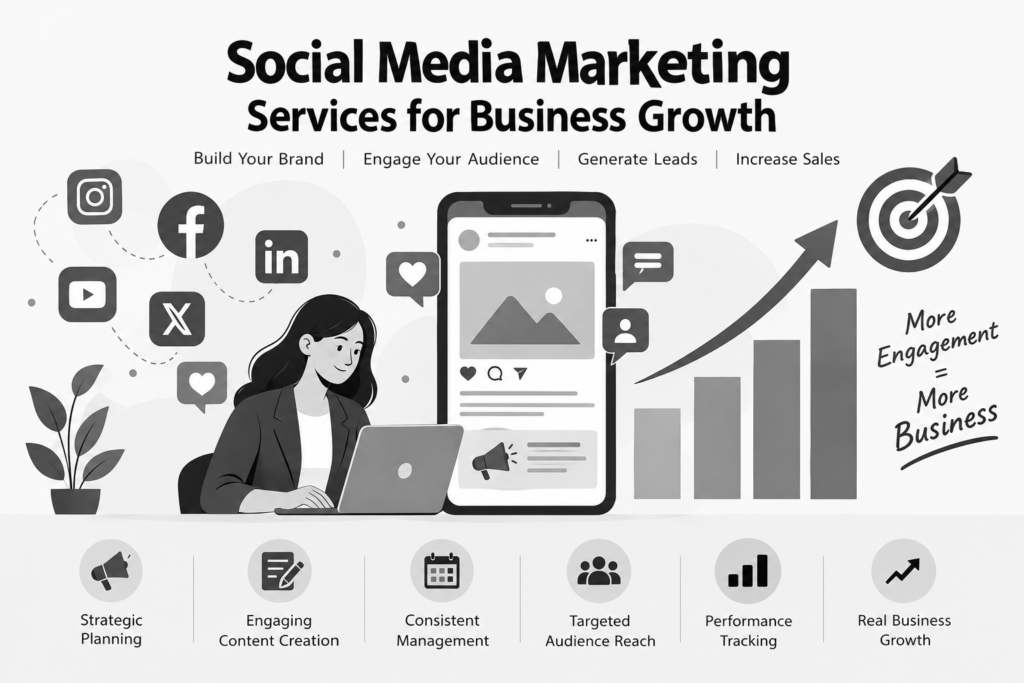
In today’s digital world, having an online presence is essential for businesses that want to reach new customers and build long-term growth. Social media marketing helps businesses connect with their target audience, build brand awareness, increase engagement, generate leads, and drive customers toward their products or services.
However, simply creating social media accounts and posting occasionally is not enough. Businesses need a clear strategy that combines audience research, valuable content, consistent communication, and performance analysis.
Professional social media marketing services can help businesses develop a stronger online presence while focusing their marketing efforts on measurable business goals.
What Is Social Media Marketing?
Social media marketing is the process of using social media platforms to promote a business, connect with its target audience, build brand awareness, and achieve marketing objectives.
Platforms such as Instagram, Facebook, LinkedIn, and YouTube give businesses opportunities to communicate directly with potential customers.
An effective social media strategy can include:
- Audience research
- Social media strategy development
- Content planning
- Content creation
- Social media management
- Community engagement
- Lead generation
- Social media advertising
- Performance tracking
- Strategy optimization
The goal is not simply to gain followers. The goal is to attract the right audience and turn social media activity into meaningful business outcomes.
Why Is Social Media Marketing Important for Business Growth?
Social media has become an important part of the customer journey. People often discover businesses, research products and services, read reviews, and communicate with brands through digital platforms.
A strategic approach can help businesses in several ways.
1. Increase Brand Awareness
Consistent and useful content can help more people discover your business. When your brand regularly appears in front of the right audience, potential customers become more familiar with what you offer.
Over time, this visibility can help establish stronger brand recognition.
2. Reach Your Target Audience
Social media allows businesses to communicate with specific audiences based on factors such as interests, professional background, location, and online behavior.
Understanding your target audience makes it easier to create content that addresses their needs and problems.
3. Build Trust and Credibility
Customers are more likely to engage with businesses they understand and trust.
Sharing educational content, industry knowledge, customer experiences, behind-the-scenes information, and useful tips can help demonstrate your expertise and establish credibility.
4. Generate Leads
Social media can become an important source of potential customers.
Businesses can use educational content, calls to action, landing pages, direct messages, lead forms, and advertising campaigns to encourage interested users to take the next step.
5. Increase Website Traffic
Your social media profiles can also act as channels for bringing visitors to your website.
Blog posts, service pages, case studies, landing pages, and other useful resources can be promoted through relevant social media content.
6. Support Sales and Conversions
Social media can influence customers at different stages of the buying journey.
A person may first discover your business through a social media post, learn more through your content, visit your website, and eventually become a customer.
This makes social media a valuable part of a wider digital marketing strategy.
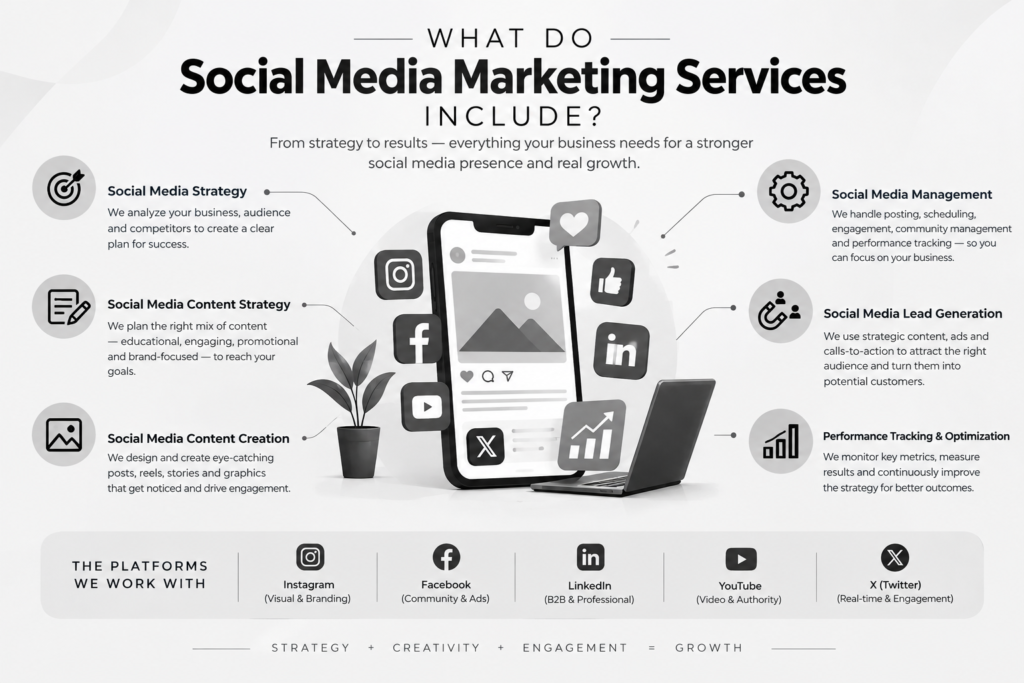
What Do Social Media Marketing Services Include?
Social media marketing services can cover different activities depending on a business’s goals and requirements.
Social Media Strategy
A successful strategy begins with understanding the business.
This can include:
- Understanding business goals
- Identifying the target audience
- Researching competitors
- Selecting relevant platforms
- Developing content themes
- Creating a posting strategy
- Defining performance goals
A clear strategy ensures that content is created with a purpose instead of simply posting for the sake of being active.
Social Media Content Strategy
Content is one of the most important parts of social media marketing.
A content strategy determines:
- What topics to publish
- Who the content is for
- Which formats to use
- How often to publish
- What action users should take
Content can include educational posts, short-form videos, carousels, customer-focused posts, industry insights, promotional content, and engaging posts.
Social Media Content Creation
Good content should provide value while representing the brand consistently.
Depending on the platform and audience, content may include:
- Reels
- Images
- Carousels
- Videos
- Stories
- Educational posts
- Promotional posts
- Testimonials
- Industry tips
The objective is to create content that attracts attention, communicates value, and encourages meaningful engagement.
Social Media Management
Social media management involves maintaining a consistent presence across selected platforms.
It can include:
- Content scheduling
- Publishing posts
- Caption optimization
- Audience engagement
- Comment management
- Message monitoring
- Content calendar management
- Performance monitoring
Consistent management helps businesses maintain an active and professional online presence.
Social Media Lead Generation
Social media can be used to attract potential customers and move them toward an enquiry or purchase.
Lead-generation activities may include:
- Strong calls to action
- Lead-focused content
- Website links
- Landing pages
- Direct-message campaigns
- Lead forms
- Social media advertising
The most effective approach depends on the business model and target audience.
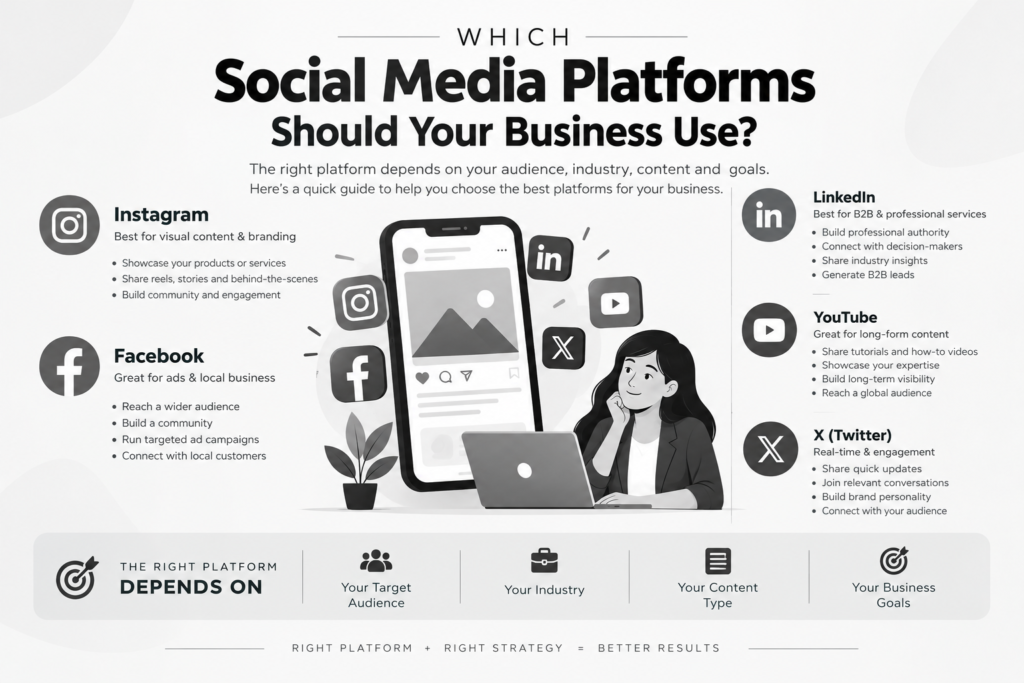
Which Social Media Platforms Should Your Business Use?
Your business does not necessarily need to be active on every social media platform.
The right platform depends on your audience, industry, content, and goals.
Instagram Marketing
Instagram can be useful for businesses that rely heavily on visual content and audience engagement.
It can be used for:
- Brand awareness
- Reels
- Educational content
- Product or service promotion
- Community building
- Lead generation
Facebook Marketing
Facebook can help businesses reach communities, distribute content, communicate with customers, and support advertising campaigns.
It can be particularly useful for businesses targeting specific local or interest-based audiences.
LinkedIn Marketing
LinkedIn is particularly valuable for B2B businesses, consultants, professionals, freelancers, and personal brands.
It can help businesses:
- Build professional authority
- Connect with decision-makers
- Share industry insights
- Generate B2B leads
- Build professional relationships
YouTube Marketing
YouTube can be useful for businesses that can explain their products, services, or expertise through video.
Tutorials, educational videos, demonstrations, and long-form content can help businesses build visibility and authority.