
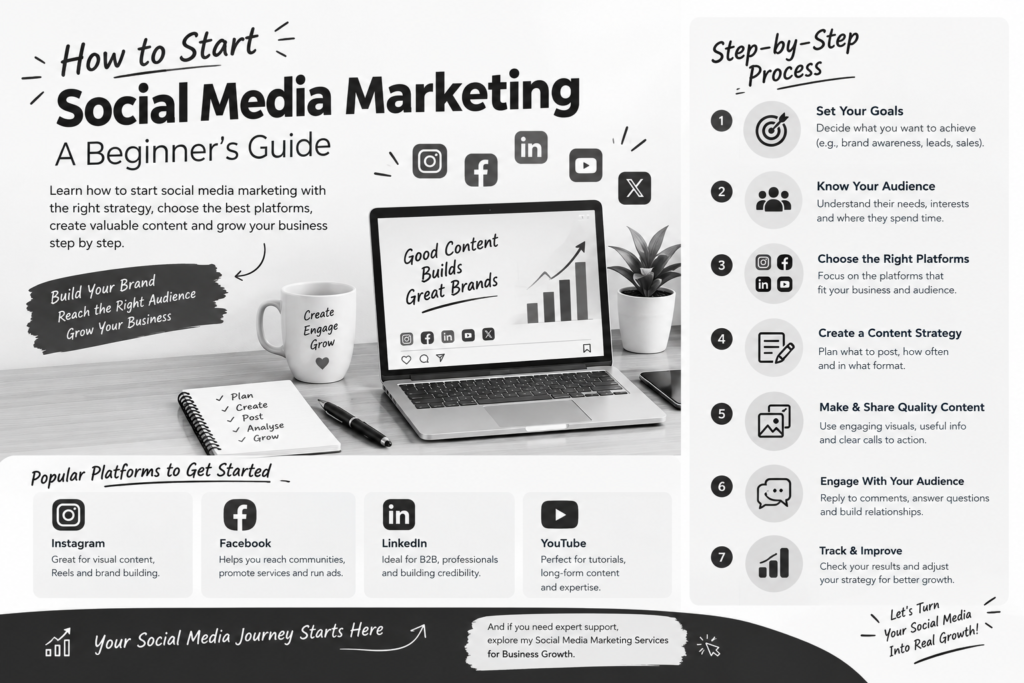
How to start Social Media Marketing Services
Social media has become an important part of how businesses connect with customers, promote their services, and build an online presence. Whether you are a small business owner, entrepreneur, freelancer, or beginner, learning how to start social media marketing can help you reach the right audience and create opportunities for business growth.
However, successful social media marketing involves more than creating an account and posting content regularly. It requires a clear strategy, an understanding of your target audience, valuable content, consistent engagement, and performance tracking. With the right approach, businesses can use social media to build brand awareness, attract potential customers, generate leads, and support long-term growth.
What Is Social Media Marketing?
Social media marketing is the process of using platforms such as Instagram, Facebook, LinkedIn, and YouTube to promote a business, communicate with customers, and achieve marketing objectives.
It includes content creation, audience engagement, social media management, brand promotion, advertising, and performance analysis. Businesses use these activities to increase visibility, build relationships with potential customers, and encourage actions such as visiting a website, requesting a quote, or purchasing a product.
For businesses that lack the time or expertise to manage these activities, professional social media marketing services can provide support with strategy development, content planning, account management, and campaign optimisation.
Why Is Social Media Marketing Important for Businesses?
A strong social media marketing services presence can help businesses communicate their value and connect with potential customers where they spend time online.
1. Build Brand Awareness
Regularly sharing relevant and useful content helps people discover your business and understand what you offer. Over time, consistent communication can improve brand recognition and make your business more familiar to your target audience.
2. Reach the Right Audience
Understanding your target audience allows you to create content that addresses their interests, needs, and challenges. Choosing suitable platforms and developing relevant messages can make your marketing efforts more effective.
3. Build Trust and Credibility
Educational posts, practical tips, customer feedback, and examples of your work can help demonstrate your expertise. Providing useful information instead of focusing only on sales can encourage people to develop confidence in your business.
4. Generate Leads and Enquiries
Social media can help businesses attract potential customers through valuable content, clear calls to action, website links, lead forms, and advertising campaigns. These activities can encourage interested users to enquire about your products or services.
5. Drive Website Traffic
Sharing useful blog posts, service information, and other relevant resources can encourage social media users to visit your website. This creates opportunities for visitors to learn more about your business and take the next step.

How to Start Social Media Marketing Step by Step
Step 1: Define Your Business Goals
Before creating social media content, identify what you want to achieve. Your goals will influence the platforms you choose, the content you publish, and the metrics you track.
Common social media marketing goals include:
- Increasing brand awareness
- Growing a relevant audience
- Improving audience engagement
- Driving website traffic
- Generating qualified leads
- Increasing sales and enquiries
For example, a freelance digital marketer may focus on reaching small business owners who need help with SEO, social media management, or paid advertising. Their content should explain common marketing problems and demonstrate how their services can help.
Step 2: Identify Your Target Audience
Understanding your audience is essential for creating content that attracts the right people.
Consider their age range, location, interests, business needs, challenges, and purchasing motivations where relevant. Research the questions they ask, the problems they face, and the type of information they seek online.
For example, a small business owner may want to increase website traffic, improve social media engagement, or generate more enquiries without exceeding their marketing budget.
By addressing these problems in your content, you can make your social media presence more useful and relevant.
Step 3: Choose the Right Social Media Platforms
Not every business needs to be active on every platform. Choose channels that align with your audience, industry, content style, and business objectives.
Instagram: Useful for visual content, Reels, carousels, brand awareness, and audience engagement.
Facebook: Useful for community engagement, local business promotion, content distribution, and advertising.
LinkedIn: Suitable for freelancers, consultants, professional service providers, and businesses targeting other businesses.
YouTube: Useful for tutorials, demonstrations, educational videos, and building expertise through video content.
Start with one or two relevant platforms and develop a consistent approach before expanding to additional channels.
Step 4: Develop a Social Media Content Strategy
A content strategy helps you decide what to publish, who you want to reach, and what action you want your audience to take.
Create a balanced mix of content categories:
- Educational content: Share useful information, guides, and industry tips.
- Engagement content: Ask questions and encourage discussions.
- Promotional content: Explain your products, services, and offers.
- Problem-solving content: Address common challenges faced by your audience.
- Trust-building content: Share testimonials, work examples, and behind-the-scenes information.
For a freelance digital marketer, content could include SEO tips, social media marketing strategies, paid advertising guides, and advice for improving online business visibility.
Step 5: Create Valuable and Consistent Content
Content should provide value rather than simply fill your posting calendar. Use clear captions, relevant keywords, appealing visuals, and suitable formats to communicate your message.
You can experiment with:
- Short-form videos and Reels
- Educational carousel posts
- Informative graphics
- Stories and polls
- Tutorials and demonstrations
- Industry tips and updates
Develop a realistic publishing schedule that you can maintain. Review the performance of your content and adjust your approach based on what your audience finds useful.
Step 6: Engage With Your Audience
Social media is a two-way communication channel. Responding to comments, answering questions, and replying to relevant messages can help build stronger relationships with your audience.
Pay attention to the questions people ask and the topics they discuss. These interactions can provide ideas for future content and help you understand what your potential customers need.
Step 7: Track and Improve Your Performance
Measure your results to understand whether your social media activities are contributing to your goals.
Useful metrics include:
- Reach and impressions
- Likes, comments, shares, and saves
- Profile visits
- Website clicks
- Leads and enquiries
- Conversions
Choose metrics that match your objectives. For example, if your goal is lead generation, enquiries and qualified leads may be more meaningful than follower growth alone.
Use these insights to improve your content, audience targeting, and overall strategy.